Division 02 of 06
Chemical Fertilizers
- Lines carried
- 7 listed
- Regions served
- 6 corridors
- Documentation
- 8 document types
- Enquiries answered
- Within one business day
Licensed activity · Chemical Fertilizers Trading
Overview
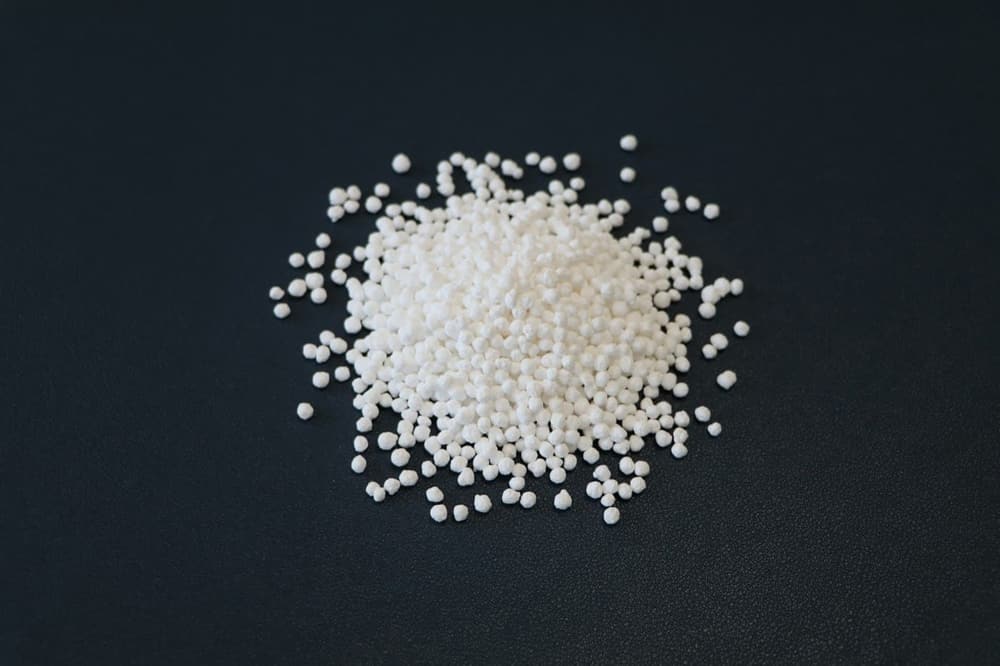
We trade the standard mineral fertiliser grades: prilled and granular urea, DAP, MAP, TSP, MOP and SOP, ammonium sulphate, calcium ammonium nitrate, chemically granulated and blended NPKs, and the water-soluble grades used in fertigation. Offers are made against a written specification with guaranteed nutrient minima, moisture and granulation, and against a named production origin. Where a destination operates a fertiliser registration regime, the grade is checked against that register before contracting.
Volumes are sourced from producers and established distributors, and each parcel is tied to a production lot with its own certificate of analysis. Third-party inspection and certificate of analysis are arranged at load port on request (SGS, Bureau Veritas, Intertek or a buyer-nominated surveyor), covering sampling, nutrient analysis, granulometry, moisture and draft survey weight. The contract states whether quality and weight determined at load port by the appointed surveyor are final for settlement.
Cargoes move as bulk vessel parcels, bulk-in-container with liners, or bagged and palletised, depending on the discharge capability at destination. Urea, ammonium sulphate and potash absorb atmospheric moisture and are shipped in lined or laminated bags where destination storage is humid or the material will be held over a season. Ammonium nitrate based products are offered only where the classification, permit and storage rules of the transit and destination countries can be met, and the documentation is prepared accordingly.
Typical applications
- Broadacre nitrogen application on cereals, maize and rice
- Base phosphate placement at sowing for cereals, legumes and oilseeds
- Potash on chloride-tolerant field crops (MOP) and on chloride-sensitive crops such as tobacco, potato and citrus (SOP)
- Fertigation and drip programmes in protected and open-field horticulture
- Custom bulk blending to a soil-test-based nutrient recommendation
- Technical use — urea to ISO 22241 for diesel exhaust fluid and ammonium sulphate for industrial processes, quoted separately from fertiliser grade
Regions served
- United Arab Emirates and the wider GCC
- East and Southern Africa
- West Africa
- South Asia
- South-East Asia
- Central Asia and the Caucasus
Lines carried
Grades, analyses and packaging
Indicative specifications, shown so a procurement team can judge the fit before making contact. Binding figures and tolerances are set in the offer.
01
Urea 46% N — Granular
Granular urea for direct application and bulk blending. Crushing strength and low biuret decide the grade, since the nitrogen figure is fixed by the molecule.
Packaging
- 50 kg PP woven bags, 20 t or 25 t per container
- 1,000 kg jumbo bags (FIBC)
- Bulk vessel parcels and bulk-in-container with liner
| Nitrogen | 46% min, dry basis |
|---|---|
| Biuret | 1.0% max |
| Moisture | 0.5% max |
| Granulation | 2–4 mm, 90% min; crushing strength 2.5–3.5 kgf |
| Conditioning | Anti-caking treated; formaldehyde-conditioned grades available |
| HS Code | 3102.10 |
02
Urea 46% N — Prilled
Prilled urea for direct application, dissolution and industrial use. It dissolves faster than granular and is preferred where the material is applied in solution.
Packaging
- 50 kg PP woven bags
- 1,000 kg jumbo bags (FIBC)
- Bulk
| Nitrogen | 46% min, dry basis |
|---|---|
| Biuret | 1.0% max; 0.9% max on request |
| Moisture | 0.5% max |
| Particle size | 1–2.4 mm, 90% min |
| Technical grade | Urea to ISO 22241-1 for diesel exhaust fluid is a separate specification and is quoted separately |
| HS Code | 3102.10 |
03
DAP 18-46-0
Granular diammonium phosphate for base phosphate application, quoted on total and water-soluble P₂O₅ rather than on total phosphate alone.
Packaging
- 50 kg PP woven bags
- 1,000 kg jumbo bags (FIBC)
- Bulk
| Nutrients | N 18% min; total P₂O₅ 46% min |
|---|---|
| Water-soluble P₂O₅ | 41% min |
| Moisture | 2.0% max |
| Granulation | 2–4 mm, 90% min |
| Cadmium | Limit set by destination; Regulation (EU) 2019/1009 caps phosphate fertilisers at 60 mg Cd/kg P₂O₅ |
| HS Code | 3105.30 |
04
MAP 11-52-0 and TSP 46% P₂O₅
Granular monoammonium phosphate and triple superphosphate for base phosphate application, plus water-soluble MAP 12-61-0 for fertigation.
Packaging
- 50 kg PP woven bags
- 25 kg bags for water-soluble MAP
- 1,000 kg jumbo bags (FIBC)
- Bulk
| MAP | N 11% min; P₂O₅ 52% min; water-soluble P₂O₅ 48% min |
|---|---|
| TSP | P₂O₅ 46% min; water-soluble P₂O₅ 40% min |
| Moisture | MAP 1.5% max; TSP 4.0% max |
| Granulation | 2–4 mm, 90% min |
| Water-soluble grade | MAP 12-61-0, solubility 99% min, low pH, for injection and drip systems |
| HS Code | 3105.40 (MAP); 3103.11 (TSP) |
05
MOP 60% K₂O and SOP 50% K₂O
Muriate of potash in standard, granular and compacted grades, and sulphate of potash for chloride-sensitive crops. Colour, pink or white, is a source characteristic rather than a quality measure.
Packaging
- 50 kg PP woven bags with PE liner
- 1,000 kg jumbo bags (FIBC)
- Bulk; 20 ft containers normally used for dense potash
| MOP | K₂O 60% min (KCl 95% min); moisture 0.5% max |
|---|---|
| SOP | K₂O 50% min; S 17–18%; Cl 1.5% max |
| Granulation | Standard 0.3–1 mm; granular and compacted 2–4 mm |
| Sodium chloride | Varies by source in MOP; stated per lot on the certificate of analysis |
| HS Code | 3104.20 (MOP); 3104.30 (SOP) |
06
Ammonium Sulphate 21-0-0 and CAN 27% N
Ammonium sulphate as a combined nitrogen and sulphur source, and calcium ammonium nitrate where nitrate nitrogen and calcium are required.
Packaging
- 50 kg PP woven bags with PE liner
- 1,000 kg jumbo bags (FIBC)
- Bulk for ammonium sulphate, subject to destination rules for CAN
| Ammonium sulphate | N 21% min; S 24% min; free acid 0.2% max; caprolactam, steel and granular grades |
|---|---|
| Ammonium sulphate size | Crystal 0.5–2 mm; compacted or granular 2–4 mm |
| CAN | N 27% (13.5% nitrate, 13.5% ammoniacal); CaO 8% min |
| Regulatory status | Ammonium nitrate based fertilisers may fall under UN 2067, Class 5.1 depending on composition; classification rests on the trough test in the UN Manual of Tests and Criteria, and import, transit and storage permits are destination-specific |
| HS Code | 3102.21 (ammonium sulphate); 3102.60 (calcium ammonium nitrate) |
07
NPK Compounds, Blends and Water-Soluble Grades
Chemically granulated compounds, bulk blends made to a buyer's formula, and fully water-soluble grades for injection and drip irrigation.
Packaging
- 25 kg bags for water-soluble grades
- 50 kg PP woven bags for compounds and blends
- 1,000 kg jumbo bags (FIBC)
- Bulk for blending plants
| Compound grades | 15-15-15, 16-16-16, 20-10-10, 12-12-17+2MgO and other granulated grades |
|---|---|
| Blends | Blended to buyer formula from urea, DAP or MAP, MOP or SOP and micronutrient carriers |
| Water-soluble grades | 19-19-19, 20-20-20, MKP 0-52-34, potassium nitrate 13-0-46, calcium nitrate 15.5% N with 26% CaO, urea phosphate 17-44-0 |
| Solubility | 99% min for water-soluble grades, with EC and pH in solution stated per grade |
| Micronutrients | Zn, B, Fe, Mn and Cu as sulphates or as EDTA and DTPA chelates |
| HS Code | 3105.20 (NPK); 3105.60 (MKP); 3102.60 (calcium nitrate); 2834.21 or 3105.90 for potassium nitrate depending on presentation |
Trade terms
How this division ships, and what travels with the cargo
Packaging & stowage
- Standard export bagging is 50 kg PP woven bags at 20 t or 25 t per container; FIBCs are used where the buyer has forklift and hopper handling.
- Urea, ammonium sulphate and MOP take up atmospheric moisture, so PE-lined or BOPP laminated bags are specified for humid destinations and for season-long storage.
- Bags carry the grade and nutrient declaration, net weight, lot number, production date, producer, origin and any statutory text the destination mandates. Subsidy-scheme marking is applied only against authorised artwork supplied by the buyer.
- Bulk-in-container loading uses a liner and bulkhead. Payload governs, so 20 ft units are normally used for dense potash and phosphate.
- Bulk vessel parcels require confirmed hold cleanliness and, for hygroscopic cargo, hold ventilation and weather-working clauses in the charter.
Delivery terms
- FOB — bulk parcels and containers loaded at the named port on the buyer's nominated vessel or booking.
- CFR — the usual basis for bagged and bulk parcels into GCC, East African and South Asian ports.
- CIF — as CFR with marine cover at the Institute Cargo Clauses (C) minimum set by Incoterms 2020; ICC (A) arranged on request.
- FAS — for bulk parcels where the buyer's vessel or barge lifts cargo from alongside at the load port.
- DAP — delivered to a named inland store or blending plant, with import clearance and duties for the buyer's account.
- FCA — handover cleared for export at a named terminal for buyers using their own freight.
Documentation
- Commercial invoice and packing list with grade, nutrient declaration, net and gross weight and HS code
- Bill of lading, or charter party bill of lading with the governing charter for vessel parcels
- Certificate of origin, attested or legalised where the destination requires it
- Certificate of analysis per production lot, stating the method used for each declared nutrient
- Independent inspection certificate of quality, sampling and weight at load port, with draft survey report for bulk
- Safety data sheet in GHS format
- Fertiliser registration or import permit reference where the destination operates one
- Heavy metal or radioactivity certificate where the destination requires it
Producers & suppliers
Selling into this division
Producers and distributors with allocated export tonnage are invited to share specification, monthly availability, load port and bagging capability. Offers are assessed on documented analysis, lot traceability and access for load-port inspection.

Next step
Tell us the specification. We will come back with origins, terms and a price.
Send the grade, quantity, destination port and delivery window. If a line sits outside what we carry, we will say so rather than substitute it.
Replies within one business day